This ETIAS airport procedures guide explains what to expect at European airports and borders once ETIAS starts. ETIAS is not yet operational and the EU has not announced a launch date; when it runs, carriers and border guards will check your authorisation electronically via your passport.
Key Takeaways
- ETIAS is checked electronically at border control through your passport scan
- No physical ETIAS document is needed as it is linked to your passport
- Automated e-gates may be available for ETIAS holders at major airports
- Border officers may ask about your trip purpose, accommodation, and return plans
- Average processing time at border control is 5-15 minutes with valid ETIAS
How ETIAS Will Be Checked at European Airports
This ETIAS airport procedures guide provides the latest 2026 information. When you arrive at a European airport with your ETIAS travel authorization, the process is designed to be quick and seamless. Unlike traditional visa processes that require physical documents, your ETIAS is electronically linked to your passport. When a border officer scans your passport, the system automatically verifies your ETIAS status, checking its validity, remaining days of your 90/180 allocation, and any security flags.
| ETIAS factor | Detail | Cost / Time 2026 | For travellers |
|---|---|---|---|
| Application fee | EU Commission | €20 | Free for under 18 / over 70 |
| Processing time | Standard online | Minutes; up to 4 days | Up to 14 or 30 days longer if extra info or an interview is needed |
| Validity | Multiple entry | 3 years or passport expiry | Whichever comes first |
| Maximum stay | Per 180-day period | 90 days | Schengen rolling rule |
| Coverage area | 30 European countries | Single authorisation | EU + Schengen-associated |
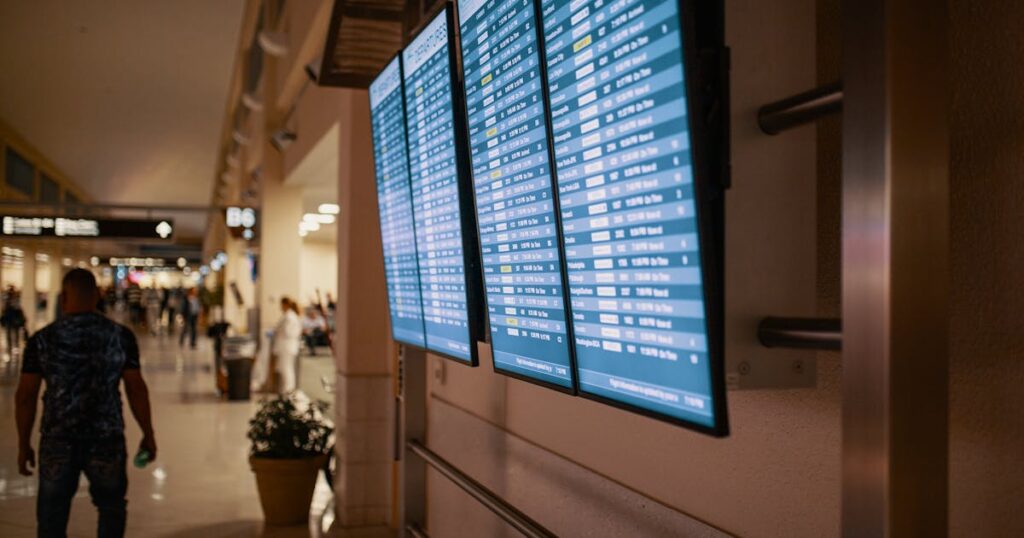
The entire border control process typically takes 5 to 15 minutes for travelers with a valid ETIAS. In most cases, the border officer will scan your passport, ask a few basic questions, and stamp your entry. The stamp is important as it records your entry date for calculating your 90/180-day limit.
ETIAS launches late 2026 — be first to know
One e-mail the day applications open. No spam.
Step-by-Step: Arriving at a Schengen Airport
Upon landing at a Schengen airport, follow signs for “Non-EU/EEA Passport Holders” or “All Passports” lanes. At the border control booth, present your passport to the officer. The officer will scan your biometric passport, which automatically triggers an ETIAS database check. You may be asked standard questions about the purpose of your visit, your accommodation, the duration of your stay, and whether you have sufficient funds.

Having these items ready speeds up the process: your passport with at least 3 months validity beyond your planned stay, your ETIAS confirmation email on your phone (backup), proof of accommodation for at least your first nights, proof of return or onward travel, and evidence of sufficient financial means such as a bank statement or credit card.
Automated Border Control and E-Gates
The EU Entry/Exit System (EES), launching alongside ETIAS, will introduce automated border control for non-EU travelers. E-gates will scan your passport and capture biometric data including fingerprints and facial recognition. This technology is designed to reduce wait times while enhancing security. Major airports like Paris CDG, Amsterdam Schiphol, Frankfurt, and Madrid already have e-gate infrastructure ready for deployment.

Not all travelers will be eligible for e-gates initially. First-time visitors to the Schengen Area will need to register their biometrics at a staffed booth. Subsequent visits may qualify for faster e-gate processing once your data is in the system.
What Border Officers May Ask
European border officers are professional but thorough. Common questions include where you will stay, how long you plan to visit, what is the purpose of your trip, whether you have traveled to Europe before, and what your occupation is. Answer honestly and concisely. Having supporting documents like hotel confirmations and return tickets readily available demonstrates preparation and speeds up the process.
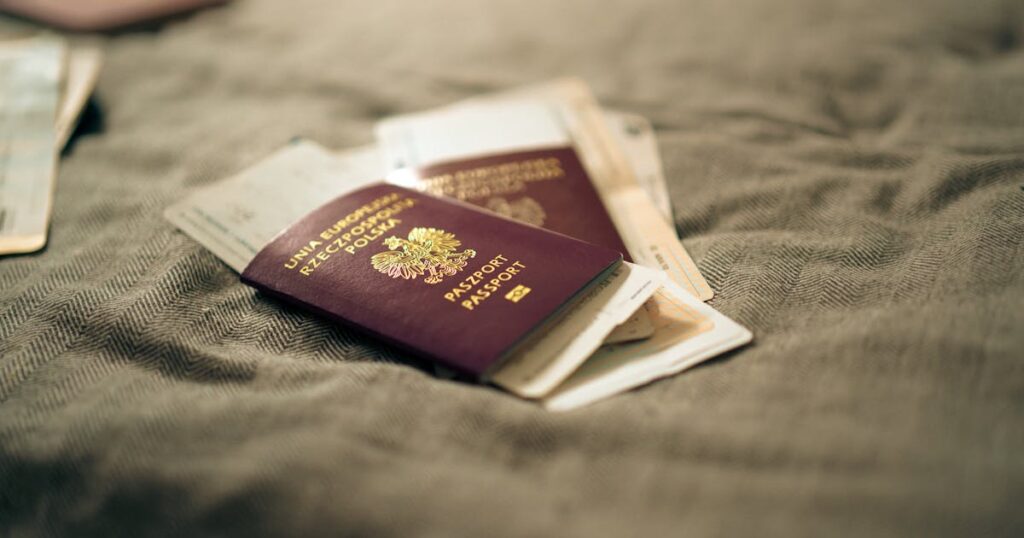
If an officer has additional questions, you may be directed to a secondary inspection area. This is not necessarily a cause for concern and can happen randomly or if additional verification is needed. Stay calm, cooperate fully, and provide any requested documentation.
Connecting Flights Within the Schengen Area
If your first entry point is different from your final destination, you will clear immigration at the first Schengen airport you land in. For example, if you fly from New York to Rome with a connection in Frankfurt, you clear border control in Frankfurt. Your subsequent flight to Rome is treated as a domestic flight within the Schengen Area with no additional immigration checks.

This means your first entry airport should have enough connection time for border control processing. Allow at least 90 minutes for connections involving border control at major hub airports. Some airports like Amsterdam Schiphol are known for efficient processing, while others during peak season may have longer queues.
Common Issues and How to Avoid Them
The most common issues at European borders include expired ETIAS authorization, passport with less than 3 months remaining validity, inability to demonstrate sufficient funds, no proof of return travel, and having exceeded the 90/180-day limit on a previous trip. All of these can result in entry denial, so check each item before traveling.
Technical glitches with the ETIAS system are rare but possible during the initial rollout. Keep a screenshot or printout of your ETIAS confirmation as backup. If there is a system error at the border, the officer can verify your status through alternative channels.
Entry Through Land Borders and Ports
ETIAS also applies at land borders and ferry ports. If you enter by train, bus, or car from a non-Schengen country, expect border checks at the crossing point. Ferry ports processing passengers from non-Schengen countries have immigration facilities similar to airports. Land border crossings may have less infrastructure but follow the same ETIAS verification process.
For the latest updates on Europe food guide travelers policies, always check official European Union travel authorization sources before your departure.
Related ETIAS Articles
Learn more about ETIAS and European travel:
Frequently Asked Questions
Do I need to print my ETIAS confirmation?
No printout is required as ETIAS is linked electronically to your passport. However, having a screenshot or printout of your confirmation email is recommended as a backup in case of technical issues at the border.
What happens if my ETIAS expires while I am in Europe?
Your ETIAS only needs to be valid at the time of entry into the Schengen Area. If it expires during your stay, you can remain until the end of your authorized 90-day period. However, if you exit and wish to re-enter, you will need a new ETIAS.
Can I be denied entry even with a valid ETIAS?
Yes, ETIAS does not guarantee entry. Border officers retain the right to deny entry if you cannot demonstrate the purpose of your visit, sufficient funds, accommodation arrangements, or if there are security concerns. ETIAS is an authorization to travel, not an automatic right of entry.
How long are airport queues for non-EU travelers?
Wait times vary by airport and season. During summer peak season, major hubs can have 30-60 minute queues. Off-peak, 10-20 minutes is typical. Early morning arrivals generally face shorter queues than afternoon flights.
Will I get a passport stamp with ETIAS?
Initially, border officers will continue to stamp passports. Once the Entry/Exit System (EES) is fully operational, physical stamps will be replaced by digital entry/exit records, eliminating the need for stamps altogether.
Official Sources
- ETIAS Official Portal — Application and travel authorization
- EU Entry/Exit System — Border management technology
Practical guide to ETIAS travel preparation
Effective European travel preparation begins with understanding ETIAS requirements. ETIAS (European Travel Information and Authorisation System) is not yet operational: the EU has not announced a launch date and will do so several months in advance. Once it starts, it will apply to citizens of approximately 60 visa-exempt countries including USA, Canada, UK, Australia, Japan, and South Korea. The fee is €20 for adults aged 18-70, free for those under 18 or over 70. Once ETIAS is running, most applications are expected to be processed within minutes. If yours takes longer, you should get a decision within four days (96 hours), extended by up to 14 days if you’re asked for more information or documents, or by up to 30 days if you’re invited to an interview. Once applications open, you will apply online before your trip.
For payment via the official ETIAS portal, all major Visa, Mastercard and AMEX cards are accepted globally. Have your passport, payment card and travel information ready before starting — the application takes approximately 10 minutes. The system asks about previous travel history, health declarations, criminal history (within 10-20 years depending on offense), and Schengen entry refusals. Honest declaration is critical — serious doubts about the accuracy of your answers are a ground for refusal in their own right, and false information can also lead to an ETIAS being annulled or revoked and to refusal of entry.
Once approved, ETIAS authorises multiple entries for 3 years (or until your passport expires, whichever comes first). The 90/180 Schengen rule still applies — you can stay maximum 90 days within any 180-day rolling period across all 30 ETIAS-required countries combined. ETIAS does NOT replace your need to follow this rolling period rule. Your authorisation is electronically linked to your passport — getting a new passport invalidates ETIAS, requiring a new application (€20 for applicants aged 18-70). Keep approval email digitally and on paper as backup.
European travel tips and cultural awareness
European countries vary significantly in culture, language, and social norms. Mediterranean countries (Italy, Spain, Greece) have later meal times — dinner often after 21:00, with shops closing 13:30-17:00 for siesta. Northern European countries (Germany, Netherlands, Scandinavia) value punctuality strictly — being even 5 minutes late is considered rude. Tipping varies: France and Italy include service charge in restaurants (no extra needed), while Germany and Netherlands appreciate 5-10%. Card payments are widely accepted but cash is preferred in smaller establishments, especially in southern Europe.
For local transport, Eurail or Interrail passes offer flexibility for multi-country trips — €420 for 5 days in 1 month for adults. Major cities have excellent metros: Paris, Berlin, Madrid, Rome, Vienna, Amsterdam, Stockholm. Budget airlines (Ryanair, easyJet, Wizz Air, Vueling) offer cheap flights between cities, but watch baggage fees. For long-distance trains, the OBB-Nightjet sleeper trains connect major capitals. ETIAS will be required for 30 European countries: the Schengen Area members (including non-EU Iceland, Norway, Switzerland and Liechtenstein) plus Cyprus – but not Ireland.
Frequently asked questions about ETIAS
When does ETIAS launch and is it required now?
ETIAS is not yet operational and applications are not being accepted. The EU has not announced a launch date yet; it will announce it several months in advance. Currently no application is required — you can travel to ETIAS-required countries visa-free under existing rules. We recommend bookmarking the official EU ETIAS portal and applying as soon as it goes live for your planned trip.
How much does ETIAS cost?
ETIAS costs €20 per person for adults aged 18-70. It is free for travellers under 18 years old or over 70 years old. The fee is paid online during application via Visa, Mastercard or AMEX. There are no extra fees if you apply directly via the official EU ETIAS portal.
How long is ETIAS valid?
ETIAS is valid for 3 years from approval (or until your passport expires, whichever comes first). It permits multiple entries to all 30 ETIAS-required European countries. You can stay up to 90 days within any 180-day rolling period across all participating countries combined. This 90/180 rule is independent of ETIAS — it applies to all visa-exempt travellers regardless of authorisation type.
Which countries require ETIAS?
ETIAS applies to 30 European countries: all Schengen Area members (including the Schengen-associated Norway, Iceland, Liechtenstein and Switzerland) plus Cyprus. Ireland is NOT included as it is not part of Schengen — separate UK and Ireland travel rules apply. Always verify the latest list on the official EU ETIAS portal as countries may join or modify their participation.
Do US citizens need ETIAS?
Yes — once ETIAS launches, US passport holders will need it for travel to any of the 30 ETIAS countries, unless they are exempt (for example, as holders of a residence permit or long-stay visa issued by one of these countries). The €20 fee will apply to US travellers aged 18-70; those under 18 or over 70 and eligible family members of EU citizens will not pay. ETIAS is similar to the US ESTA system that visa-waiver visitors to the US must obtain — a pre-screening electronic authorisation. Currently US citizens travel to Europe visa-free, and ETIAS will add this online pre-screening step but does not replace the 90-day stay limit.
What if my application is denied?
If an ETIAS application is refused, you will receive an email stating the grounds for refusal. Possible grounds include prior immigration violations, incorrect or incomplete answers, criminal record matches, or hits in EU and international databases (SIS, VIS, Europol, Interpol). You can appeal the decision in the Member State that refused your application, in accordance with that country’s national law — the refusal notice explains the procedure — or apply for a Schengen visa at the relevant consulate.
 English
 Shqip
 العربية
 Français
 ქართული
 עִבְרִית
 简体中文
 香港中文
 繁體中文
 Español
 Português do Brasil
 日本語
 한국어
 Bahasa Melayu
 Українська
 Română
 Српски језик
 Türkçe