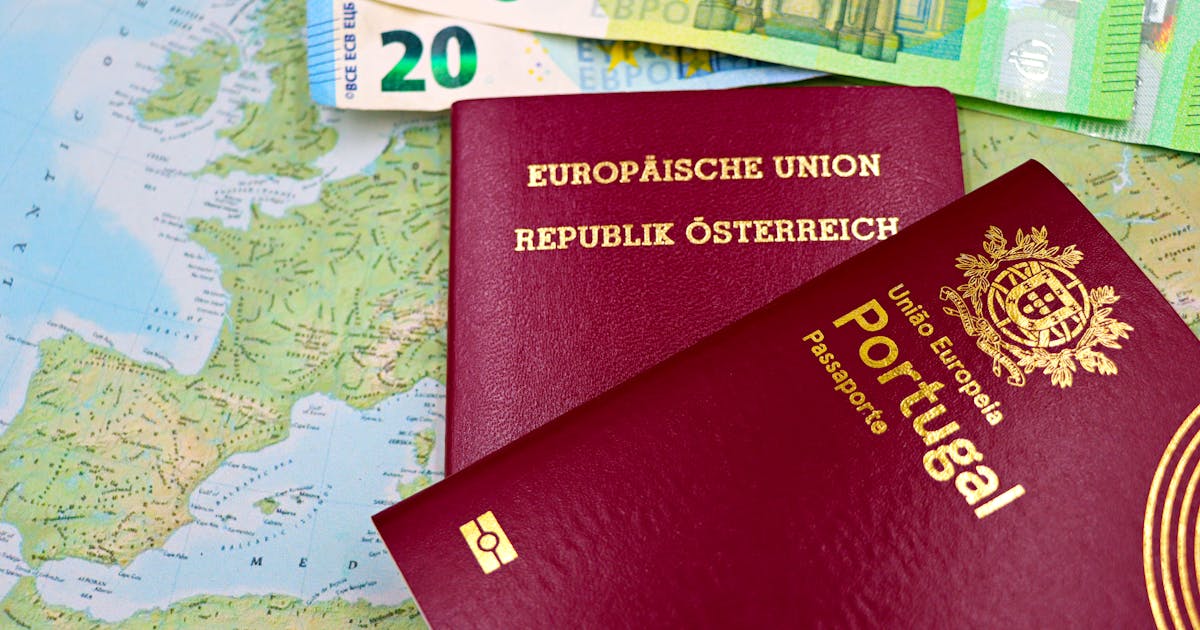
Importantly, if you are planning to travel to Europe, you need to know which countries require ETIAS travel authorization. The European Travel Information and Authorisation System (ETIAS) applies to all 30 countries in the Schengen Area, plus several additional European nations that have agreements with the system. As a result, this comprehensive guide lists every ETIAS country, explains the Schengen Area, and helps you understand exactly where you will need ETIAS to travel.
📋 Key Takeaways
- What Is the ETIAS System
- Complete List of 30 ETIAS Countries (Schengen Area)
- Most Popular ETIAS Destinations for Travelers
- European Countries That Do NOT Require ETIAS
- How to Apply for ETIAS to Visit These Countries
- Related ETIAS Guides
What Is the ETIAS System?
Essentially, ETIAS is a new electronic travel authorization system developed by the European Union. It is not a visa — it is a pre-travel screening system similar to the US ESTA or the Canadian eTA. Citizens of visa-exempt countries (including the United States, United Kingdom, Canada, Australia, and Japan) must obtain ETIAS before traveling to any Schengen Area country.
The EU established this system under EU Regulation 2018/1240 and Frontex (the European Border and Coast Guard Agency) manages it. Once operational, ETIAS will be mandatory for short stays of up to 90 days within any 180-day period.
Complete List of 30 ETIAS Countries (Schengen Area)
The following 30 countries are members of the Schengen Area and will require ETIAS authorization for visa-exempt travelers. Overall, these countries share a common border policy and allow free movement between them without passport checks at internal borders.

EU Schengen Countries (23 countries)
Specifically, these 23 European Union member states are full Schengen members:
- Austria — Capital: Vienna
- Belgium — Capital: Brussels
- Croatia — Capital: Zagreb (joined Schengen in 2023)
- Czech Republic — Capital: Prague
- Denmark — Capital: Copenhagen
- Estonia — Capital: Tallinn
- Finland — Capital: Helsinki
- France — Capital: Paris
- Germany — Capital: Berlin
- Greece — Capital: Athens
- Hungary — Capital: Budapest
- Italy — Capital: Rome
- Latvia — Capital: Riga
- Lithuania — Capital: Vilnius
- Luxembourg — Capital: Luxembourg City
- Malta — Capital: Valletta
- Netherlands — Capital: Amsterdam
- Poland — Capital: Warsaw
- Portugal — Capital: Lisbon
- Slovakia — Capital: Bratislava
- Slovenia — Capital: Ljubljana
- Spain — Capital: Madrid
- Sweden — Capital: Stockholm
Non-EU Schengen Countries (4 countries)
Additionally, these four countries are not EU members but are part of the Schengen Area through bilateral agreements:
- Iceland — Capital: Reykjavik
- Liechtenstein — Capital: Vaduz
- Norway — Capital: Oslo
- Switzerland — Capital: Bern
New Schengen Members (3 countries)
Furthermore, these countries have recently joined or are completing their integration into the Schengen Area:
- Bulgaria — Capital: Sofia (joined Schengen in 2024)
- Romania — Capital: Bucharest (joined Schengen in 2024)
- Cyprus — Capital: Nicosia (pending full membership)
Most Popular ETIAS Destinations for Travelers
While all 30 Schengen countries require ETIAS, certain destinations attract the majority of international visitors. Here are the most visited ETIAS countries and what makes them popular travel destinations.

France
Notably, France is the most visited country in the world, welcoming over 90 million international tourists annually. For example, Paris, the French Riviera, and the Loire Valley are among the top attractions. Typically, American, British, Canadian, and Australian travelers will need ETIAS to visit France for tourism, business, or transit purposes.
Spain
Spain ranks as the second most visited country in Europe. Similarly, Barcelona, Madrid, Seville, and the Balearic Islands draw millions of visitors each year. As a result, with ETIAS you can freely travel between mainland Spain and its Schengen islands including Mallorca, Ibiza, and the Canary Islands.
Italy
Travelers know Italy for its rich history, art, and cuisine. In particular, Rome, Florence, Venice, and the Amalfi Coast are perennial favorites. A single ETIAS authorization covers all Italian territories within the Schengen Area.
Germany
Germany is Europe’s largest economy and a major business travel hub. Berlin, Munich, Frankfurt, and Hamburg offer a mix of history, culture, and modern innovation. ETIAS covers both business and tourism visits to Germany.
Greece
In particular, Greece offers ancient ruins, stunning islands, and Mediterranean beaches. Athens, Santorini, Mykonos, and Crete are among the most popular destinations. Travelers will need ETIAS for all Greek territory within the Schengen Area.
European Countries That Do NOT Require ETIAS
Not all European countries are part of the ETIAS system. The following countries have their own entry requirements and are not covered by ETIAS:

- United Kingdom — Left the EU in 2020; has its own Electronic Travel Authorisation (ETA) system
- Ireland — Not a Schengen member; maintains its own immigration policy
- Turkey — Requires a separate e-Visa for most nationalities
- Russia — Has its own visa requirements
- Ukraine — Separate entry requirements
- Serbia, Montenegro, Bosnia, Albania, North Macedonia, Kosovo — Western Balkan countries with their own visa policies
Important: If you plan to travel to both ETIAS and non-ETIAS countries during your European trip, you will need to arrange separate entry authorizations for each. Your ETIAS authorization only covers travel within the Schengen Area.
How to Apply for ETIAS to Visit These Countries
The ETIAS application process is straightforward and entirely online. Here is what you should know:

- Check your eligibility — Verify that your nationality is on the ETIAS-eligible countries list
- Prepare your documents — You need a valid passport, email address, and payment method
- Complete the online form — The application takes approximately 10 minutes
- Pay the fee — The ETIAS fee is EUR 20 for adults (free for travelers under 18 or over 70)
- Receive your authorization — Most applications are processed within minutes
One ETIAS authorization covers all 30 Schengen countries — you do not need separate authorizations for each country you plan to visit. Learn more in our complete guide: What Is ETIAS?
Frequently Asked Questions About ETIAS Countries

How many countries require ETIAS?
Travelers need ETIAS for visiting 30 countries in the Schengen Area. This includes 23 EU member states (Austria, Belgium, Croatia, Czech Republic, Denmark, Estonia, Finland, France, Germany, Greece, Hungary, Italy, Latvia, Lithuania, Luxembourg, Malta, Netherlands, Poland, Portugal, Slovakia, Slovenia, Spain, Sweden) plus 4 non-EU Schengen members (Iceland, Liechtenstein, Norway, Switzerland) and 3 newer members (Bulgaria, Romania, Cyprus).
Do I need a separate ETIAS for each country?
No. A single ETIAS travel authorization covers all 30 Schengen Area countries. Once approved, you can freely travel between any ETIAS countries during the validity period of your authorization (3 years or until your passport expires).
Does the UK require ETIAS?
No. The United Kingdom left the European Union in 2020 and is not part of the ETIAS system. The UK has its own Electronic Travel Authorisation (ETA) system for visitors. ETIAS only applies to Schengen Area countries.
Is Ireland part of the ETIAS system?
No. Ireland opted out of the Schengen Agreement and maintains its own immigration policy. You do not need ETIAS to travel to Ireland, but you may need other travel documentation depending on your nationality.
Can I travel to multiple ETIAS countries on one trip?
Yes. With a valid ETIAS authorization, you can travel freely between all 30 Schengen countries during a single trip. There are no border checks between Schengen countries, so you can visit multiple destinations seamlessly. The total stay cannot exceed 90 days within any 180-day period across all Schengen countries combined.
Related ETIAS Guides
- What Is ETIAS? Complete Guide to EU Travel Authorization
- How to Apply for ETIAS: Step-by-Step Guide
- ETIAS Requirements: Eligibility & Documents
- ETIAS Cost: Fee & Payment Methods
Additional ETIAS preparation essentials
Before you travel to a Schengen country, verify three practical items that often catch first-time ETIAS applicants by surprise. First, confirm your passport’s validity: ETIAS requires a biometric passport with at least 3 months validity beyond your planned Schengen departure date. Second, prepare your accommodation details: while ETIAS does not require a hotel booking at application time, border officers at Schengen entry points (Frankfurt, Paris CDG, Amsterdam, Madrid, Rome FCO) routinely ask where you’ll be staying. Have a confirmation email accessible. Third, carry proof of onward travel: a return or onward ticket within the 90-day stay limit is mandatory; one-way tickets with ETIAS are flagged for additional questioning at border control.
Frequently asked questions
How long is ETIAS valid?
An ETIAS authorisation is valid for three years from approval or until your passport expires, whichever comes first. Within that period you can make unlimited entries to the Schengen Area, each up to 90 days within any rolling 180-day period. If you replace your passport, change your name, or change citizenship, you must apply for a new ETIAS — the old one becomes invalid the moment the linked passport changes.
What if my ETIAS is denied?
An ETIAS denial does not mean you cannot travel to Europe — it means you must apply for a standard Schengen visa at the embassy of the country where you’ll first enter. Denial reasons typically include prior overstays in Schengen, criminal records, certain past visa refusals, or recent travel to specific high-risk regions. Embassy interviews typically take 2-4 weeks. You can also appeal an ETIAS denial directly to the EU within 60 days, but appeals require legal expertise and rarely succeed without strong new evidence.
Where can I check the latest ETIAS information?
The official EU travel-europe ETIAS portal is the only authoritative source for fees (€7), eligible nationalities, and procedural updates. Avoid third-party sites that often charge inflated fees (some demand €50-150 versus the official €7) and may show outdated information. The European Commission typically announces major policy changes at least 30 days in advance via official channels.
 English
 Shqip
Shqip العربية
 Français
 ქართული
 עִבְרִית
 简体中文
简体中文 香港中文
香港中文 繁體中文
繁體中文 Español
 Português do Brasil
 日本語
日本語 한국어
한국어 Bahasa Melayu
 Українська
 Română
 Српски језик
 Türkçe