No — you do not need ETIAS for a direct trip to Ireland: Ireland is an EU member state but it is NOT in the Schengen area, so ETIAS does not apply there. ETIAS is also not yet operating, and the EU will announce its launch date several months in advance. This guide explains exactly when ETIAS applies — on continuation flights to Paris, Berlin or Amsterdam — and when it does not, such as a direct hop into Dublin from London, New York or Boston. We also cover the Common Travel Area between Ireland and the UK, and how to plan a combined Dublin + Schengen trip without legal headaches.
Quick-facts: ETIAS in 2026 at a glance
In short: ETIAS is the EU’s upcoming pre-travel authorisation for visa-exempt non-EU travellers visiting Schengen countries. It is not yet operating and no launch date has been set; the EU will announce the date several months in advance. Once it starts, the €20 fee will cover 3 years (travellers under 18 and over 70 are exempt from the fee), and most applications are expected to be processed quickly, although some may take longer. Updates are published on the official EU ETIAS portal.
Read also: The full list of Schengen countries explained
ETIAS launches late 2026 — be first to know
One e-mail the day applications open. No spam.
| Fact | Source |
|---|---|
| €20 fee once ETIAS starts (originally €7; no fee under 18 or over 70) | Regulation (EU) 2025/1411 |
| ETIAS validity 3 years | European Commission, January 2026 |
| 30 Schengen-area countries | European Council, 27 February 2026 |
| Up to 30 days maximum stay per visit | Schengen Visa Code, Article 11 |
| 90 days in any 180-day period | Schengen Borders Code (EU) 2016/399 |
| Not yet operating; launch date to be announced several months in advance | travel-europe.europa.eu, October 2026 |
Does ETIAS apply to travel to Ireland in 2026?
NO — ETIAS does NOT apply to direct travel to Ireland. Ireland is an EU member state but it stayed outside Schengen from 1997, alongside the UK. Therefore, visa-exempt third-country nationals (UK, US, Canada, Australia, Japan, etc.) can fly direct to Dublin (DUB), Cork (ORK) or Shannon (SNN) without an ETIAS.
However, you must still hold a valid passport (3+ months beyond intended stay) and meet Irish immigration officer questions on arrival. Indeed, Irish border control routinely asks for proof of return ticket, accommodation, sufficient funds, and reason for visit. UK Common Travel Area (CTA) rules also apply: British and Irish citizens travel between the UK and Ireland without routine immigration controls, although immigration officers may ask for proof of identity and nationality, and carriers usually require photo ID.
Therefore, ETIAS only enters the picture if your trip CONTINUES to a Schengen country — for example, Dublin then Paris, Dublin then Amsterdam. So you would need ETIAS before boarding the Paris flight out of Dublin Airport. Consequently, this is a common compliance miss.

Do I need ETIAS for Dublin–Paris–Amsterdam multi-stop trips?
Yes, once ETIAS starts — if Dublin is your first stop and you continue to Schengen, visa-exempt travellers will need ETIAS BEFORE boarding the Schengen-bound flight (as of October 2026, ETIAS is not yet operating). Specifically, on a London–Dublin–Paris route: the London–Dublin segment requires no ETIAS, but the Dublin–Paris segment requires it.
ETIAS is not yet operating: no applications are accepted yet, and the EU has not set a launch date, which it will announce several months in advance. Once applications open, the safest approach is to apply for ETIAS on the EU’s official ETIAS site before you leave home. That way, even if your itinerary changes mid-trip, you’re already covered.
In addition, the ETIAS is linked electronically to your passport for 3 years, so a single application covers all your Schengen trips during that validity. The €20 fee is non-refundable — still one of the cheapest pre-travel authorisations anywhere.
How much does ETIAS cost in 2026 for Ireland-only travellers?
If you only visit Ireland and Britain, you pay NOTHING for ETIAS — the system simply doesn’t apply. However, if you may continue to Schengen, the €20 ETIAS fee is a small price for flexibility.
There is no separate “Ireland ETIAS”: Ireland is outside Schengen, so ETIAS does not apply to direct trips there. For trips that continue to Schengen, check the latest ETIAS information on the official ETIAS website.
In addition, factor Dublin daily costs: a budget hotel in city centre averages €175/night in June 2026 (Central Statistics Office Ireland, March 2026 release), a 24h Leap Card city zone costs €8 (Transport for Ireland 2026 tariff), and a pint of Guinness averages €6.20 in Temple Bar. Ireland uses the euro (€).

Top 10 things to do in Ireland in 2026
Ireland combines literary heritage, dramatic Atlantic coastline and one of Europe’s best craft-beer scenes. 2026 also marks the 15th anniversary of Dublin’s “City of Literature” celebrations under UNESCO designation.
Specifically: 1) Trinity College + Book of Kells Experience (from €25; the shorter Book of Kells & Old Library ticket from €19, prices vary by time slot). 2) Guinness Storehouse (€25 weekday). 3) Dublin Castle + Chester Beatty Library (FREE). 4) Day-trip to Cliffs of Moher (several operators run full-day tours from Dublin, typically from around €80 per adult; check current prices). 5) Day-trip to Giant’s Causeway via Belfast (Northern Ireland is part of the UK, so UK rules apply, including the UK ETA for visa-exempt non-EU travellers).
6) Galway old town + Aran Islands ferry. 7) Killarney National Park + Ring of Kerry. 8) Belfast Titanic museum. 9) Cobh transatlantic emigration museum (Cork harbour). 10) Wild Atlantic Way road-trip (2,500 km coastal route). The 3-day Dublin Pass (€115) bundles 30+ attractions plus airport transfer.
Practical tips: arrival, transit, packing for Ireland
Dublin Airport (DUB) handles 33 million passengers in 2026 with NO EES gates (Ireland skipped EES alongside Schengen). However, US-bound passengers benefit from US Pre-Clearance: Terminal 2 hosts a US CBP facility allowing arrivals at JFK/EWR as domestic.
The Airlink 747 reaches Dublin city centre in 25 minutes (€7 single, €12 return). A taxi runs €25–€35 to Temple Bar. Dublin Bus and the Luas tram both use the Leap Card — 24h cap at €8, weekly at €25 (Transport for Ireland tariff, January 2026).
In addition, pack rain gear year-round: Ireland averages 18 wet days per month. Indeed, Met Éireann forecasts a wet-but-warm summer 2026. Consequently, layered clothing is essential.

Common Travel Area: Ireland–UK movement rules
The CTA between Ireland and the UK predates the EU and continues post-Brexit. Therefore, Irish and UK citizens cross the Irish Sea (or the Northern Ireland border) without routine immigration controls, although officers at Irish airports and ports may ask for proof of identity and nationality, and carriers usually require photo ID. However, third-country nationals (US, Canada, Australia etc.) DO need to show passports — but no visa.
The CTA is NOT part of the EU acquis — it’s a bilateral arrangement reaffirmed in 2019. Indeed, the UK and Ireland coordinate visa lists so that visa-required nationalities (e.g. Indian, Nigerian, Pakistani) generally need separate British and Irish visas. The exception is the British-Irish Visa Scheme: Indian nationals living in India and Chinese nationals living in China can visit both countries on a single visa. This does not apply to Nigerian or Pakistani nationals.
In addition, Northern Ireland (Belfast, Derry) is part of the UK — not the EU. Therefore, no ETIAS applies there either. Consequently, the entire island of Ireland (Republic + Northern Ireland) sits OUTSIDE the Schengen/ETIAS regime.
Family travel: ETIAS rules for Ireland + Schengen onward trips
For Ireland-only trips, no ETIAS for any family member. However, for Dublin + Paris (or any Schengen continuation), once ETIAS starts, every visa-exempt traveller will need their own ETIAS. Travellers aged 18–70 pay €20, while under-18s and over-70s are exempt from the fee (but not from ETIAS itself). Therefore, a family of two adults and two children under 18 will pay €40 in total.
In addition, each child needs their own ETIAS linked to their own passport. However, the parent’s ETIAS account can include minor passport details and parental relationship. There are no EU-wide rules on travel documents for minors, so carrying proof of your relationship to the child, such as a birth certificate, can be useful. Check the requirements of the countries you are visiting and of your airline.
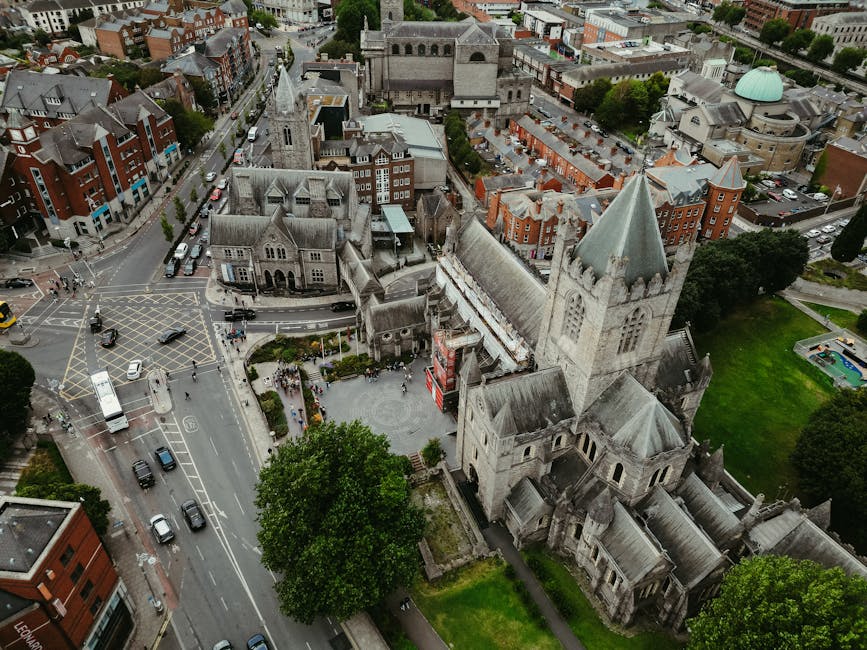
Ireland is genuinely family-friendly. Most attractions discount under-18s; the Dublin Bus 90-minute child fare is €1; and Phoenix Park, Dublin Zoo and the Botanic Gardens offer affordable family days out.
What can go wrong: common ETIAS application errors
ETIAS is not yet operating, so there are no official statistics on refusals. For Ireland + Schengen trips, the most avoidable mistake is forgetting that, once ETIAS starts, the onward Schengen leg needs it.
One Ireland-specific slip-up stands out: skipping ETIAS for the Dublin–Paris flight because the traveller assumed Ireland covers them. As a result, the Schengen-bound airline at Dublin Airport refuses boarding. Consequently, allow at least 4–7 days for ETIAS approval before any onward Schengen flight.
However, you cannot reuse a refused ETIAS. Indeed, EU-LISA recommends waiting 30 days for rejected records to clear.
Compare Dublin, London and Edinburgh: which UK/Ireland city first?
None of London, Edinburgh or Dublin require ETIAS in 2026 since the UK and Ireland are both outside Schengen. However, the UK has its own ETA (Electronic Travel Authorisation) for visa-exempt travellers, which has cost £20 since 8 April 2026. Therefore, UK trips need an ETA, Irish trips need nothing extra beyond a passport.
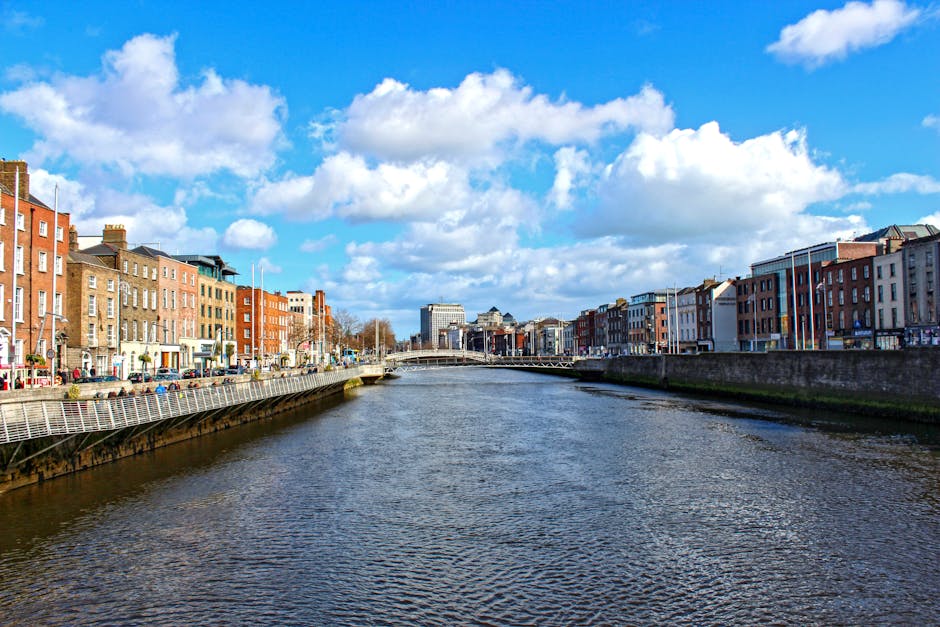
Dublin sits at the literary heart of the English-speaking world (Yeats, Joyce, Beckett), London on the imperial-financial axis, and Edinburgh on its Scottish-enlightenment heritage. Prices in Dublin run ~15% below London and ~5% above Edinburgh on hotels and dining (Numbeo Q1 2026 dataset).
In addition, the CTA means a Dublin + London + Edinburgh trip needs only a UK ETA — no further documents for the Irish leg.
Best time to visit Ireland in 2026
Ireland has a mild oceanic climate. May-September offer the warmest months (15-19°C) with the least rain. However, July-August attract peak crowds at the Cliffs of Moher and Ring of Kerry. As a result, May and September are widely considered the sweet spot.
St Patrick’s Day (17 March 2026) is the cultural high point — the Dublin parade attracts 500,000 spectators (Fáilte Ireland 2025 attendance report). Therefore, book accommodation 6 months ahead for that week.
In addition, October “Storm Eunice anniversary” weeks see strong Atlantic gales — pack a windproof shell. The Galway International Arts Festival (mid-July 2026) and Dublin Theatre Festival (October 2026) are calendar highlights.
Frequently Asked Questions about Dublin ETIAS travel
Is Ireland in Schengen?
No — Ireland opted out of Schengen in 1997. ETIAS does NOT apply for direct travel to Ireland.
Do I need ETIAS for a Dublin–Paris trip?
Not yet — ETIAS is not operating and no launch date has been set. Once it starts, visa-exempt travellers will need it for the Paris leg before boarding, so apply via the official portal before you leave home.
What about Northern Ireland?
Northern Ireland is part of the UK — no ETIAS, but a UK ETA (£20) applies for visa-exempt non-EU travellers.
Can UK and Irish citizens move freely?
Yes — CTA rules predate the EU and continue post-Brexit.
How long can I stay in Ireland on a passport?
Generally up to 3 months for visa-exempt non-EU nationals. The Irish officer at DUB makes the call.
Does Dublin Airport have EES e-gates?
No — Ireland opted out of EES alongside Schengen.
Do I need a Schengen visa AND ETIAS to combine Dublin and Paris?
You only need one OR the other. If your nationality requires a Schengen visa, ETIAS cannot replace it, apart from narrow exceptions (for example, pupils on an accompanied school trip who live in a visa-exempt country, or recognised refugees who live in a visa-exempt country or Ireland and hold a travel document issued there). If this might apply to you, check with the consulates of the countries you plan to visit. If you’re visa-exempt, you need ETIAS for the Schengen leg.
Useful resources and further reading
For more on ETIAS, see the official European Commission page at European Commission ETIAS policy page, the official ETIAS portal (travel-europe.europa.eu), and the UK FCDO advice at UK Foreign, Commonwealth & Development Office travel advice. Indeed, the EC implementation regulation provides the legal basis.
Inside europe-visa.eu, useful next reads:
- ETIAS application process
- ETIAS requirements
- list of ETIAS-required countries
- ETIAS fee details
- ETIAS validity period
- ETIAS cost breakdown
- visa vs ETIAS comparison
- ETIAS FAQ
- Schengen Area overview
- contact page
Last updated: 26 October 2026
 English
 Shqip
 العربية
 Français
 ქართული
 עִבְרִית
 简体中文
 香港中文
 繁體中文
 Español
 Português do Brasil
 日本語
 한국어
 Bahasa Melayu
 Українська
 Română
 Српски језик
 Türkçe