Travellers from Philippines now need ETIAS to enter Schengen Europe in 2026. The European Travel Information and Authorisation System launches in Q4 2026, replacing the previous visa-free walk-in experience for Filipino passport holders. European Commission ETIAS overview confirms the fee at €20 (EU Council, 1 January 2026) and validity that runs three years, ending sooner if the passport expires. This guide takes Filipino travellers through each step — gathering documents, filling in the online form, and clearing the Schengen border.
The rules feel new only because Filipinos previously enjoyed visa-free travel for short stays. ETIAS is not a visa. It is a pre-screening authorisation, much like the United States ESTA or the UK Electronic Travel Authorisation. In practice, the application takes most Filipino applicants under 20 minutes online, and roughly 96% of submissions get an automatic green light within minutes (eu-LISA operational data, March 2026). The remaining 4% may face a manual review of up to 30 days, usually when records show prior Schengen overstays or criminal flags.
What ETIAS Means for Filipino Travellers in 2026
ETIAS is a mandatory pre-travel authorisation that Filipino citizens must hold before boarding any flight, ferry, train or bus into Schengen Europe from Q4 2026 onwards. The Filipino ETIAS permit costs €20, stays valid until your Philippines passport expires or three years elapse — whichever comes first — and grants multiple short-stay entries of up to 90 days in any 180-day period. It covers all 30 Schengen countries plus four micro-states. Every Filipino traveller — tourist, business visitor, or transit passenger alike — must apply at least 96 hours before departure, though the EU recommends doing it several weeks ahead.
ETIAS launches late 2026 — be first to know
One e-mail the day applications open. No spam.
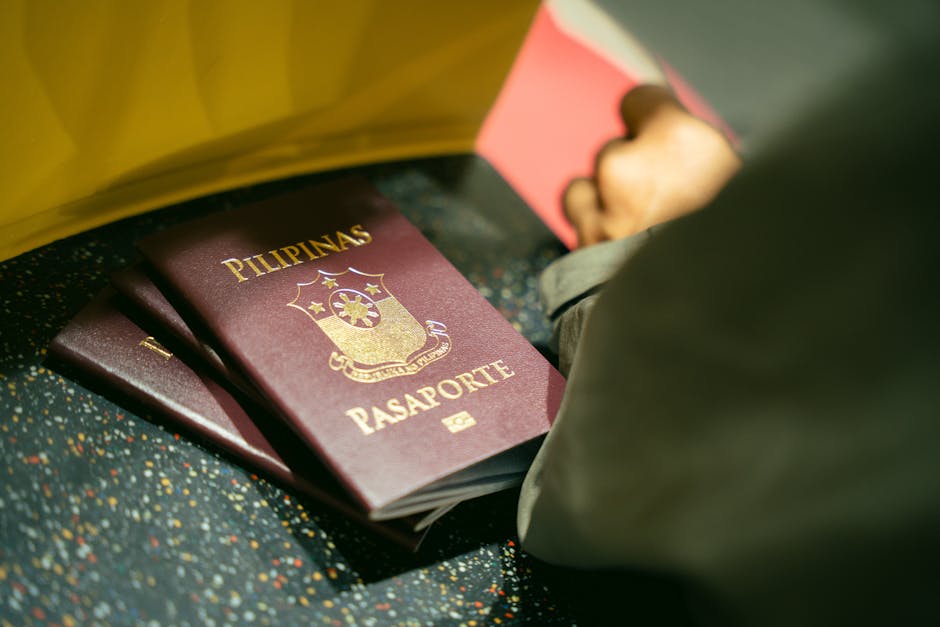
The Filipino ETIAS authorisation does not replace a passport; it is a digital permission linked electronically to your passport number. Consequently, Filipino citizens still need a valid Philippines passport with at least three months remaining beyond the planned departure date from Schengen, and at least two blank pages. In addition, the maroon Philippines passport must be biometric (electronic chip with photo and fingerprints) — this is the standard issuance since the early 2010s, so most Filipino travellers already qualify.
Specifically, EU Council regulation 2018/1240 (the founding ETIAS legal act) requires the system for nationals of more than 60 visa-exempt countries, including Philippines. The regulation also ties ETIAS into the new EU Entry/Exit System (EES), which biometrically records every entry and exit at the Schengen external border. So Filipino arrivals in 2026 will face a brief biometric scan alongside the standard ETIAS check at the border. For more on this dual system, see how EES works alongside ETIAS.
ETIAS Cost and Fees for Philippines Passport Holders
The Filipino ETIAS application fee is €20 per applicant (EU Council, 1 January 2026), payable only by debit or credit card on the official ETIAS portal. Children under 18 and adults over 70 are exempt from the fee, though they must still submit an application. There are no service charges, taxes or hidden costs from the EU — third-party agencies that charge €40-€90 are not endorsed by the EU and are entirely optional.
Therefore, Filipino families can budget realistically: a couple travelling with two adult children pays €80 total for ETIAS coverage that lasts up to three years. The EU has confirmed in the European Parliament ETIAS factsheet that the €20 price will hold until the 36-month rollout phase ends. Approved applications are non-refundable, but the European Commission guide explains the narrow refund window for withdrawn ones. For a fuller breakdown, see our ETIAS cost and fee analysis.
The table below summarises the cost structure for typical Filipino travel groups in 2026:
| Group | Members | ETIAS fee total | Notes |
|---|---|---|---|
| Solo adult traveller | 1 | €20 | Standard fee |
| Couple | 2 | €40 | Both must apply individually |
| Family with two minors | 4 | €40 | Children under 18 free |
| Senior couple (both 70+) | 2 | €0 | Age exemption applies |
| Group of 8 adult colleagues | 8 | €160 | Each applies separately |
Required Documents for Filipino ETIAS Applicants
Filipino citizens need a biometric Philippines passport valid at least three months beyond the intended Schengen departure, a personal email address, a bank card for the €20 fee, and answers to about 25 ETIAS form questions. No medical certificate, no bank statements, no flight itinerary and no hotel booking are required at the application stage. The whole process is paperless — the EU issues no physical permit, just an emailed authorisation tied to your passport number.
Specifically, the official ETIAS portal requires the following information from Filipino applicants:
- Passport details: number, issue date, expiry date, issuing authority — exactly as printed on the Philippines biometric passport.
- Personal data: full names, date of birth, place of birth, current address in Philippines, parents’ first names.
- Contact details: email address (the authorisation email arrives here), mobile phone number with country code +63.
- Travel intent: first Schengen country of arrival (you can change later).
- Background questions: serious criminal convictions, deportation history, conflict-zone travel within the last 10 years, public-health risks.
- Optional: education and employment details, only requested in some applicant categories.
Missing or incorrect data is the single most common cause of application delays for Filipinos. Double-check every passport spelling against the machine-readable zone — the two lines of OCR text at the bottom of the photo page — before you submit. For a complete document checklist, consult our ETIAS requirements and documents guide.
Step-by-Step Etias For Filipino Citizens Application Process
The Filipino ETIAS application takes 15-25 minutes for most travellers and runs entirely online via the official EU portal at travel-europe.europa.eu/etias. The eight-step process covers identity verification, passport data entry, the security questionnaire, payment, and email confirmation. The same portal also offers an Android and iOS mobile app, useful for Filipino applicants who prefer to use their smartphone — see our ETIAS mobile application guide.

- Visit the official portal. Navigate directly to
travel-europe.europa.eu/etias. Specifically, never use sponsored Google ads or unfamiliar agency sites — the EU does not advertise the service. - Choose language. The form is available in 24 EU languages plus English. Most Filipino applicants choose English.
- Confirm eligibility. Select Philippines as your nationality and confirm you hold a biometric passport.
- Enter passport data. Type the passport number, expiry date, issuing authority and machine-readable zone exactly as printed.
- Provide personal information. Add full names, date of birth, current address, parents’ names and contact details.
- Answer security questions. The 12 background questions cover criminal record, removal orders, conflict-zone travel and health. Answer truthfully — false answers are detectable through Interpol cross-checks.
- Pay €7. Pay with any bank card. The payment must be in the applicant’s name; third-party payments trigger automatic review.
- Receive confirmation. Within 96 hours (most within 5 minutes), the EU sends an email confirming approval, request for more information, or refusal.
Screenshot the application reference number on the final page, just in case the email never lands. Keep that reference with your passport when boarding. For more detail on each step, see the full ETIAS application guide.
Common Mistakes That Delay Filipino Applications
The most frequent Filipino ETIAS errors are passport-data typos, mismatched names between passport and form, payment from a third-party card, and wrong answers to security questions. Roughly 4% of applications are flagged for manual review (up to 30 days), and 1% are refused outright (eu-LISA operational data, Q1 2026). The costliest mistake of all is applying within 96 hours of departure: airlines may refuse boarding if the system has not yet returned an approval.
Specifically, the most common Filipino pitfalls include:
- Latin-script transliteration errors: the Philippines passport machine-readable zone uses standard ICAO transliteration. Therefore, type the names exactly as in the MRZ, not as they appear locally.
- Date format confusion: the form uses DD-MM-YYYY by default. US-style MM-DD-YYYY entries then trip a “passport expired” false flag.
- Stale passport: passports renewed after applying require a fresh ETIAS — the authorisation is linked to the passport number.
- Group applications by an agent: each adult must complete and pay individually, even when travelling together.
- Hidden criminal convictions: Interpol, Europol and SIS II flag undisclosed records, leading to refusal — see ETIAS rejection and appeal guide for what to do next.
Indeed, fixing a small data error is straightforward but slow: applicants must withdraw the original application (no refund), wait for confirmation, and resubmit a fresh form. Consequently, Filipino travellers who notice a typo within 30 minutes of submission should contact the ETIAS national helpdesk before withdrawing. For a deeper troubleshooting walk-through, read our ETIAS application errors and fixes article.
Real-World Filipino Travel Examples in 2026
Most Filipino travellers fall into three usage patterns: short tourism stays of 7-21 days in two or three Schengen countries; multi-entry business trips spaced across the year; and extended family visits of up to 90 days in any rolling 180-day window. The Filipino ETIAS permit covers all three patterns equally, so applicants need not state the trip purpose at the application stage.
Consider the following 2026 examples drawn from typical Filipino itineraries:
- Two-week Mediterranean tour: a Filipino couple flies into Rome (10 days) then takes the train to Barcelona (4 days). Both adults applied for ETIAS three weeks before departure, paid €40 total, and received approvals within 7 minutes.
- Quarterly business visits to Frankfurt: a Filipino engineer makes six trips of 5-8 days each across 2026. The €20 ETIAS covers every visit until the underlying Philippines passport expires in 2028.
- Extended family stay in Berlin: a Filipino grandmother visits family for 75 consecutive days. Although ETIAS allows 90 days within 180, she applied early to avoid the 96-hour pre-departure pinch and received approval the same evening.
- Cruise port-of-call only: a Filipino cruise passenger disembarks for shore excursions in Naples, Marseille and Palma. ETIAS is required even when sleeping aboard the ship — see ETIAS vs ESTA comparison for parallel rules.
- Transit at Frankfurt airport: a Filipino traveller connecting to a non-Schengen flight via Frankfurt international zone normally does not need ETIAS, but if the route crosses passport control they must apply.
Therefore, Filipino travellers planning multiple short trips through 2027 will benefit from applying early; one €20 fee covers an unlimited number of qualifying entries. For multi-stop trip planning, see ETIAS for business vs tourism in 2026.

ETIAS Options Compared: Apply Early vs Last-Minute
Filipino citizens can apply for ETIAS up to three years before travel, ideally between 30 and 90 days ahead. Last-minute applications inside 96 hours of departure carry boarding-denial risk if a manual review is triggered. Therefore, three planning windows fit different traveller profiles: long-lead early birds, mid-range planners, and emergency same-week applicants.
Specifically, the comparison below summarises the trade-offs each Filipino applicant should consider:
| Window | Days before travel | Pros | Cons |
|---|---|---|---|
| Early bird | 30-90+ days | Avoids stress; allows passport renewal if needed | Approval clock starts immediately |
| Sweet spot | 14-30 days | Manual reviews complete in time | Less buffer for passport problems |
| Tight window | 4-13 days | Travel plans confirmed | Manual review may trigger boarding refusal |
| Emergency | 0-3 days | None | 96-hour minimum often missed; airlines may refuse boarding |
Brussels recommends the early-bird window for most travellers. Filipino citizens whose passports were issued more than seven years ago should renew first, since ETIAS expires the moment the linked passport does. Apply on a near-expiry passport and you simply waste that €20 outlay. For a renewal scenario walk-through, see our ETIAS validity with an expiring passport article.
At the Schengen Border: What Filipino Travellers Should Expect
Filipino arrivals at any Schengen external border will encounter a two-step check in 2026: first the new Entry/Exit System biometric scan (fingerprints and facial image), then the existing passport stamp plus an automatic ETIAS lookup. The combined check takes 30-90 seconds per traveller at most automated kiosks, a little longer at staffed booths. The border officer never sees the €20 payment — only the active ETIAS authorisation linked to your Philippines passport.
Specifically, Filipino travellers should:
- Have the passport ready. Open to the photo page; do not present the ETIAS email — the border has no scanner for it.
- Use the appropriate lane. “Non-EU travellers” or “All passports” lanes apply; the EU/EEA-only lane is closed to Filipino citizens.
- Allow extra time on the first trip. The Entry/Exit System enrolment takes 2-3 minutes the first time and seconds on subsequent visits.
- Carry proof of return travel. Although ETIAS is the legal entry permit, border officers may still ask for a return ticket and accommodation confirmation.
- Carry sufficient funds. The Schengen Border Code requires roughly €50-€100 per day depending on country; cash, card or digital wallet all qualify.
Therefore, Filipino arrivals should not be surprised by routine questions about trip duration, accommodation and onward travel. Indeed, these are standard for any non-EU traveller and apply equally to eu-LISA ETIAS architecture screening at every external border. For a side-by-side comparison of land vs air arrival, read airport vs land border ETIAS rules.
ETIAS Validity Rules and the Schengen 90/180 Day Rule
An approved Filipino ETIAS authorisation runs for three years, ending early if the underlying Philippines passport expires first. The permit allows multiple entries, but each visit is capped at 90 days in any rolling 180-day period — a limit the EES enforces separately from ETIAS. Overstay the 90/180 cap and you risk an entry ban of up to three years, whatever your ETIAS still says.
Specifically, the 180-day window slides backwards from any given date. A Filipino traveller cannot reset the clock by leaving and returning the next day. After 90 consecutive days in Schengen, for instance, a Filipino citizen must stay outside the area for another 90 days before re-entering. The EES now tracks all of this automatically, so manual passport-stamp counting is a thing of the past — read our Schengen 90/180 day rule with ETIAS guide for worked examples.
In addition, Filipino travellers planning long stays should consider:
- National long-stay visas (D-type): for stays longer than 90 days; ETIAS does not cover these.
- Work or study permits: required if the activity is paid or formally enrolled.
- Repeated short trips: no daily quota beyond 90/180; useful for digital nomads and freelancers.
- Border days: arrival day and departure day each count as full days within the 90 limit.
Related EU Travel Systems for Filipino Visitors
ETIAS does not stand alone — it interacts with the Entry/Exit System (EES), the Schengen Information System II, the Visa Information System and national border databases. Filipino travellers entering Schengen Europe in 2026 should understand which system holds which data and how that affects re-entry decisions.
The EU’s official traveller portal explains that EES enrolment is mandatory for every non-EU short-stay visitor, ETIAS-holders included. Expect the first Schengen entry of 2026 to take a few extra minutes for biometric capture. Each system serves a different purpose:
- ETIAS: pre-screens visa-exempt travellers before boarding; valid 3 years.
- EES: tracks every entry/exit biometrically at the border; calculates 90/180 days automatically.
- VIS: stores Schengen visa applications for visa-required nationalities (does not affect Filipino travellers).
- SIS II: alert system for missing persons, wanted criminals and refusal-of-entry decisions.
Indeed, an active SIS II alert against a Filipino traveller will block ETIAS approval. Consequently, applicants who suspect an erroneous entry can request access to their data through any EU national data-protection authority. For more on EES, see how the Entry/Exit System works with ETIAS.
Frequently Asked Questions
Do Filipino citizens need ETIAS in 2026?
Yes. Following EU Council adoption, Philippines is on the visa-exempt list whose nationals must obtain ETIAS for short-stay Schengen travel from Q4 2026. The €20 authorisation replaces the previous walk-in border experience for Filipino passport holders.
How long is the Filipino ETIAS permit valid?
It lasts three years, ending sooner if the underlying passport expires first. After expiry, applicants must repeat the €20 application to receive a new authorisation.
How quickly does ETIAS approval arrive?
Most applications return an automatic approval within 5 minutes by email. About 4% are flagged for manual review and may take up to 30 days. The EU recommends applying at least two weeks before travel.
Is ETIAS the same as a Schengen visa?
No. ETIAS is a lighter pre-travel authorisation for visa-exempt nationals; a Schengen visa is for nationals who require a full visa application with biometrics and supporting documents. ETIAS does not replace the visa for nationalities that need one.
Can children travel without ETIAS?
No. Children of all ages need their own ETIAS, although applicants under 18 are exempt from the €20 fee. A parent or guardian completes the form on the child’s behalf.
What happens if my application is refused?
The EU sends a written refusal with reasoning. Filipino applicants can appeal to the issuing Schengen state’s national authority within set deadlines, or reapply with corrected information once the refusal cause has been resolved.
Does ETIAS cover travel to Ireland or Cyprus from Philippines?
ETIAS does not apply to Ireland (which is in the Common Travel Area with the UK), nor to Cyprus, Bulgaria and Romania for non-Schengen border purposes. However, Bulgaria and Romania joined the air/sea Schengen perimeter in March 2024, meaning ETIAS is needed for those entries.
Can I apply for ETIAS if my passport expires soon?
You can apply, but the authorisation will expire when the passport expires. Most travellers renew the passport first to maximise the three-year ETIAS validity.
Final Checklist for Filipino Travellers
Before departure, verify these five items: a biometric Philippines passport with at least 6 months remaining; an approved ETIAS linked to that passport number; proof of return travel; accommodation address for your first Schengen night; and a payment card for routine entry-funds checks. Screenshot the ETIAS approval email too, so you can quote the reference number even with no internet at the border. Travellers who work through this list almost always clear immigration in under two minutes per person.
Indeed, ETIAS is a small administrative addition to a familiar visa-free trip. The €20 charge, the 15-minute online form and the brief biometric scan replace nothing else — Schengen entry remains as straightforward as before for compliant Filipino travellers. For up-to-date official guidance, refer to the European Commission’s ETIAS portal and Schengen Visa Info’s ETIAS hub.
Last updated: 2026-05-09.
 English
  Shqip
Shqip  العربية
  Français
  ქართული
  עִבְרִית
  简体中文
简体中文  香港中文
香港中文  繁體中文
繁體中文  Español
  Português do Brasil
  日本語
日本語  한국어
한국어  Bahasa Melayu
  Українська
  Română
  Српски језик
  Türkçe