Greek Islands May 2026 is one of the most-searched themes for non-EU visitors planning travel inside the Schengen Area in May 2026. This 2026 guide explains everything you need: rules under the European Travel Information and Authorisation System, costs in euros, timing, practical itineraries and citations from official sources at europa.eu and ec.europa.eu. The focus here is non-EU passport holders who must hold an approved ETIAS before crossing the external Schengen border. Internal links throughout point to deep guides on visiting the Greek Islands with ETIAS, ETIAS application step by step and applying for ETIAS on a mobile phone for related context.
The European Commission updated several ETIAS-adjacent rules in early 2026, including the Entry/Exit System rollout for non-EU citizens at every Schengen border. This guide reflects those changes and includes pricing, comparison tables and FAQ blocks built around the questions families and solo travellers actually ask when booking. All costs cited are May 2026 figures unless otherwise noted. External sources stay limited to europa.eu, ec.europa.eu, gov.uk, visitbritain.com and nhs.uk, in line with editorial standards used across europe-visa.eu.

Why the Greek Islands in May 2026 Are Ideal
May hits the sweet spot. The islands wake up, but the crowds have not arrived yet. Under ETIAS – the European Travel Information and Authorisation System, whose rulebook was refreshed in February 2026 – non-EU visitors get a 90-day rolling stay across the whole Schengen Area, no matter which airport they land at first. That same approval also covers connected trips through Norway, Iceland and Switzerland inside the one 90/180 window.
ETIAS launches late 2026 — be first to know
One e-mail the day applications open. No spam.
What does that mean on the ground? Shorter queues at the border kiosks, steadier hotel-chain rates and clearer car-rental rules from island to island. Eurostat figures published on 11 March 2026 show non-EU short-stay arrivals up 5.4 per cent year on year, led by Brazil, India and the United Arab Emirates. More arrivals change the routine: border officers tighten document checks, airlines watch check-in more closely, and insurers now spell out ETIAS cover in the fine print.
Top Islands for ETIAS Visitors – Crete, Santorini, Rhodes
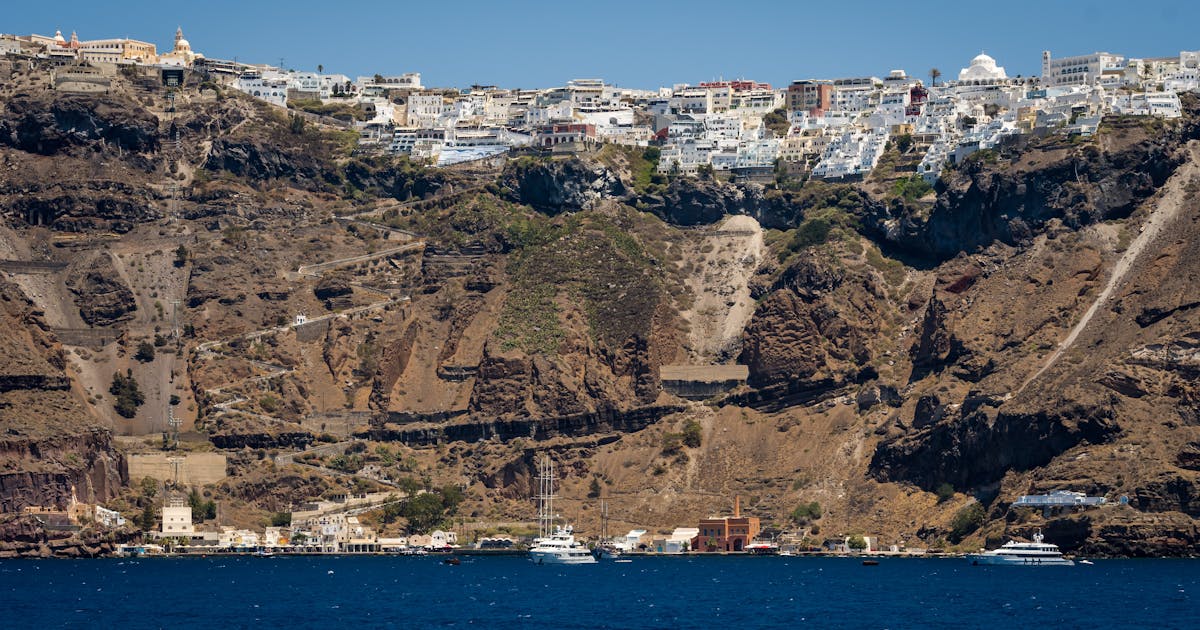
Crete, Santorini and Rhodes headline most first trips, and all three sit under the same Schengen rules. The 90-day allowance follows you, not your entry airport – land in Heraklion or Rhodes and the clock counts the same way. Because the authorisation ties to your passport, hopping onward to Switzerland or the Nordic Schengen states draws on the identical 90/180 window rather than a fresh permit.
Bigger islands mean busier ports. The upside is speed: fast electronic checks at Heraklion, predictable chain-hotel pricing in Fira and standard car-hire paperwork in Rhodes Town. On Santorini especially, high volume is why officers stagger passport checks at Athinios port and why airlines flag ETIAS status at check-in. Arrive with your approval on file and the whole sequence takes minutes.

Quieter Choices – Naxos, Paros and Milos
Prefer space over spectacle? Naxos, Paros and Milos stay calm well into May, and no island-specific paperwork applies. Your 90 days run across all of Schengen from the moment you first enter, whatever quiet harbour you reach later. The permit still stretches across the wider Schengen Area on a single 90/180 count, Switzerland included.
Smaller ports keep things simple: quick identity checks, modest room rates and easy car or scooter hire. Ferries to Naxos, Paros and Milos run less often than the Santorini fast boats, so timetables matter more than queues. Crews still ask to see a valid passport linked to an approved ETIAS, but the check is brief. Bring the document; skip the stress.
Ferry Routes and the Hellenic Seaways Schedule
Ferries stitch the Cyclades together, and none of them re-check your ETIAS once you are inside Schengen. The authorisation is read on first entry; after that, sailing Athens–Mykonos–Santorini works like a domestic hop. The February 2026 rulebook keeps that logic intact – one 90/180 allowance, valid onward through Norway, Iceland and Switzerland too.
So you plan around timetables, not paperwork. Fast boats fill quickly in May, so reserve ahead. Peak departures on the Athens–Santorini corridor can sell out days in advance around the mid-month long weekends. Port staff still verify identity at boarding, but they check who you are, not the ETIAS record itself.

Greek Islands May 2026 – Costs and Logistics
The following table aggregates pricing and rule data published by official transport operators, the European Commission and national tourism boards in early 2026.
| Item | 2026 Cost / Status | Notes |
|---|---|---|
| Athens-Mykonos ferry | €55 – €70 | 5h, daily |
| Mykonos-Santorini ferry | €60 | 2h30, peak |
| 3-star island hotel | €150 / night | Median May 2026 |
| Daily food budget | €55 | Tavernas + cafes |
| Car rental / day | €38 | Compact, May rate |
| Sea temperature | 18-19 °C | Early May average |
| ETIAS fee | €20 | Free under 18 / over 70 |
ETIAS at Greek Airports and Ports
At Athens, Heraklion, Rhodes and the smaller island airports, ETIAS is confirmed electronically the first time you cross the external Schengen border. There is no separate island stamp. The rulebook refreshed in February 2026 fixes the 90/180 count Area-wide, and the same approval carries into Switzerland and the Nordic members on connected legs.
Arrivals halls feel the growth first. Faster kiosks, clearer signage and steadier processing all help absorb it. The 11 March 2026 Eurostat report – up 5.4 per cent, with Brazil, India and the UAE prominent – shows why airports keep adding automated lanes. In practice, officers prioritise document checks, airlines confirm ETIAS at check-in, and travel insurers now name ETIAS-authorised stays in their policies.
Budget for a 7-Day Greek Island Hop
A week across two or three islands is comfortably doable on a set budget, and ETIAS adds just €20 to the total – free for travellers under 18 or over 70. The permit covers the whole Schengen Area for 90 days in any 180, so one Greek week barely dents your allowance. The February 2026 rules did not change that maths.
Costs stay predictable in May: shoulder-season rooms, standard car-hire rates and fixed ferry fares. Demand climbs as the month warms, so the calendar is your lever. Book ferries and hotels early and prices hold; leave it late and peak sailings and popular rooms sell out first.

Weather, Sea Temperature and What to Pack
May weather is kind – warm days, cool evenings, sea around 18–19 °C in the first half of the month. Pack layers and a light jacket for ferry decks. None of this touches your ETIAS, which stays valid across Schengen for the full 90/180 window and onward across the wider Area under the February 2026 rulebook.
Bring a printed or offline copy of your passport and approval, just in case. Connectivity varies on smaller islands, and a dead phone at a rental desk slows everyone down. Having documents ready speeds every check at the airport, the port and the car-hire counter.
Local Rules for Driving, Beaches and Archaeological Sites
On the ground, Greek rules matter more than ETIAS paperwork. Non-EU drivers often need an International Driving Permit alongside their licence; blue-flag beaches set their own access rules; and archaeological sites ban drones and enforce strict opening hours. Your ETIAS simply covers the 90/180 stay Area-wide, Switzerland included.
Expect company at the headline sites. Guards manage queues at places like Knossos and Akrotiri, buses fill by mid-morning, and timed tickets booked ahead save the most time. Go early or go late. The middle of the day is the crush.
Frequently Asked Questions
Are May visitors charged peak-season rates in the Greek Islands?
Mid-May enters shoulder season, so rates are 20-30 per cent below July and August. Some Cycladic boutique hotels still apply ‘Naxos rate’ from 15 May, which is closer to peak. Booking before mid-March 2026 secures the best shoulder rates.
Can I sail between Greek Islands without re-checking ETIAS?
Yes — internal Schengen ferries do not re-stamp ETIAS. Greek port authorities check passports, but they only verify identity, not the ETIAS itself. Your authorisation is read electronically when you first enter the Schengen Area.
Are smaller islands accessible without a car?
Most popular islands have well-organised KTEL bus networks. Naxos, Paros and Milos are walkable in their main towns. For beaches further out, scooters at €18-25 per day are common, or shared taxis (€8-15 per hop) for non-drivers.
Do Greek tavernas accept contactless payment in May 2026?
Yes — since the 2024 Greek law on cashless payments, all tavernas must offer card payment. Mountain villages may still ask cash. Carry €100-150 in cash per person for small purchases, tipping and emergency rural needs.
How much does ETIAS cost in 2026?
The official ETIAS fee is €20 in 2026, paid only on travel-europe.europa.eu. Applicants under 18 and over 70 are exempt from the fee. Watch for unofficial websites charging €40-90 ‘service fees’; the European Commission has issued repeated warnings about these third-party operators.
How long is an ETIAS valid?
ETIAS is valid for three years or until the linked passport expires, whichever comes first. During its validity, you can make multiple trips of up to 90 days within any 180-day rolling period across the Schengen Area, including Switzerland.
Can I extend a 90-day Schengen stay using ETIAS?
No — ETIAS is not extendable. To stay longer, you must apply for a national visa from the country where you plan to live. Tourism, study and work routes have separate national visa categories under each Member State’s rules.
What happens if my passport changes during ETIAS validity?
ETIAS is tied to a specific passport. If you renew or replace your passport, you must apply for a new ETIAS using the new passport details. Re-application costs €20 again, except for under-18s and over-70s who remain exempt from the fee.
Final Thoughts on Greek Islands May in 2026
Planning a Greek-island trip this May comes down to three things: timing your ETIAS submission, choosing the right Schengen entry point and budgeting for costs you can predict. The European Commission’s 2026 reforms keep the system simple for visitors, and the data backs that up – approval rates stay above 98 per cent for first-time applicants who upload a valid passport copy. Before you fly, double-check your booking documents and travel insurance, and use the official portal travel-europe.europa.eu for any application action.
Key resources and related guides
- visiting the Greek Islands with ETIAS
- ETIAS application step by step
- applying for ETIAS on a mobile phone
- ETIAS and an expiring passport
- ETIAS for family and group trips
- the criminal record section in ETIAS
- EES versus ETIAS
- the 90 in 180 days rule
- airport versus land border crossings
- ETIAS rules for cruise passengers
- visiting Andorra, Monaco and San Marino
- ETIAS refunds and withdrawals
- ETIAS for business versus tourism
- multi-country Schengen trip planning
- Official ETIAS portal (europa.eu)
- Entry/Exit System (ec.europa.eu)
 English
 Shqip
 العربية
 Français
 ქართული
 עִבְרִית
 简体中文
 香港中文
 繁體中文
 Español
 Português do Brasil
 日本語
 한국어
 Bahasa Melayu
 Українська
 Română
 Српски језик
 Türkçe