This UNESCO heritage Europe ETIAS guide covers everything you need to know about traveling to Europe with ETIAS in 2026, including requirements, costs, and tips.
Europe wine regions travel: Key Takeaways
- Europe has over 500 UNESCO World Heritage Sites – more than any other continent
- A single ETIAS authorization lets you visit UNESCO sites across all 30 Schengen countries
- Italy leads with 59 sites, followed by Germany (52), France (52), and Spain (50)
- Many UNESCO sites are free to visit; others charge modest entry fees
- Visiting lesser-known UNESCO sites avoids crowds while providing equally rich experiences
Europe’s UNESCO Heritage: An Unmatched Collection
This UNESCO heritage Europe ETIAS guide provides the latest 2026 information. The European continent is home to over 500 UNESCO World Heritage Sites, representing an extraordinary concentration of cultural, historical, and natural treasures. From prehistoric cave paintings in France to modernist architecture in Spain, from volcanic landscapes in Iceland to ancient olive groves in Italy, these sites tell the story of human civilization and natural wonder across millennia.
| ETIAS factor | Detail | Cost / Time 2026 | For travellers |
|---|---|---|---|
| Application fee | EU Commission | €20 | Free for under 18 / over 70 |
| Processing time | Standard online | Minutes to 4 days | Apply 96 hours ahead |
| Validity | Multiple entry | 3 years or passport expiry | Whichever comes first |
| Maximum stay | Per 180-day period | 90 days | Schengen rolling rule |
| Coverage area | 30 European countries | Single authorisation | EU + Schengen-associated |
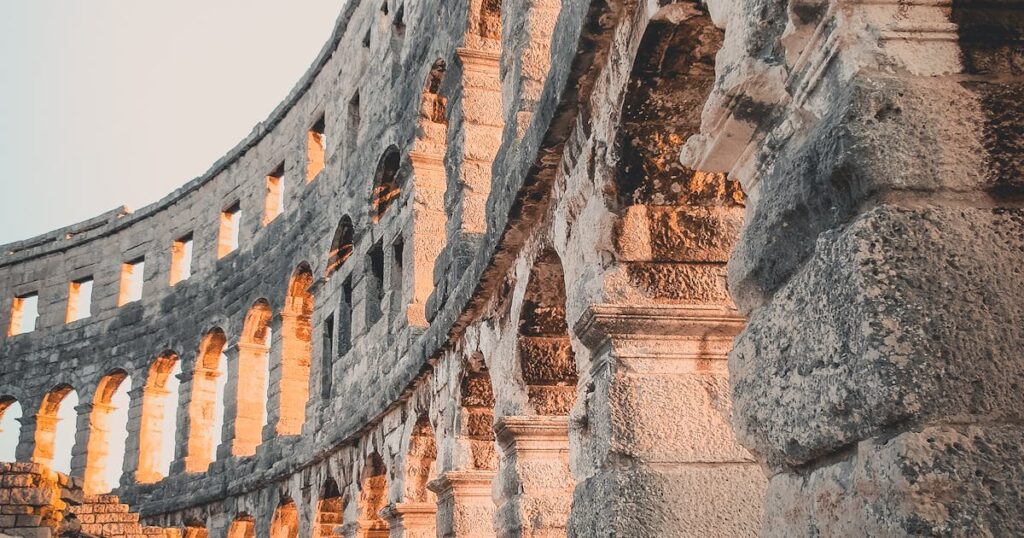
For ETIAS holders, this wealth of heritage is accessible through a single travel authorization. Whether you are drawn to ancient Roman ruins, medieval cathedrals, Renaissance palaces, or pristine natural landscapes, the Schengen Area contains enough UNESCO sites to fill dozens of trips.
ETIAS launches late 2026 — be first to know
One e-mail the day applications open. No spam.
Top UNESCO Sites by Country
Italy holds the world record with 59 UNESCO sites, including the Colosseum and historic center of Rome, the canals of Venice, the archaeological ruins of Pompeii, the historic center of Florence, and the Cinque Terre coastal villages. Germany follows with 52 sites including Cologne Cathedral, Museum Island in Berlin, and the castles of Potsdam. France also has 52 sites including the Palace of Versailles, Mont-Saint-Michel, and the cave art of the Vézère Valley.
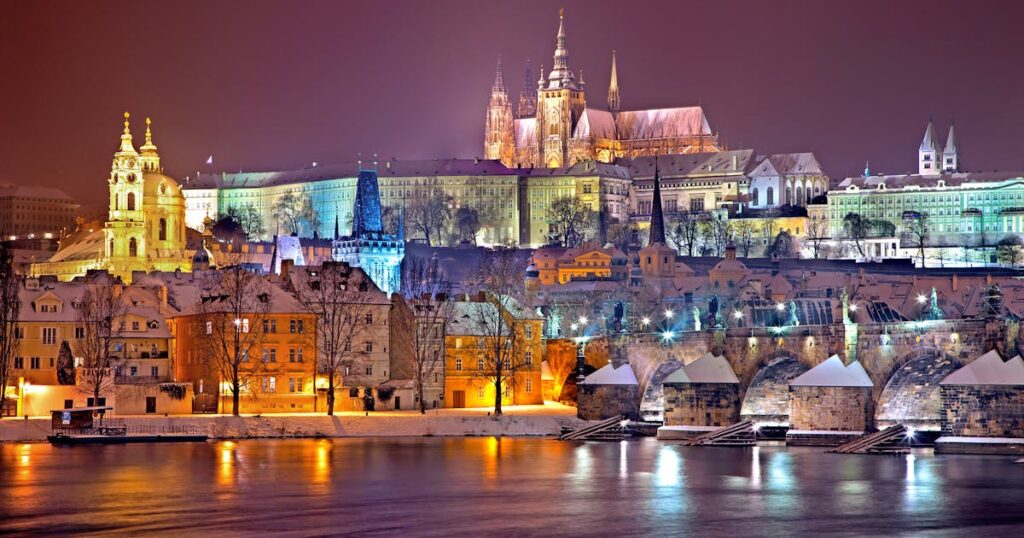
Spain contributes 50 sites including the Alhambra in Granada, Antoni Gaudí’s works in Barcelona, and the historic city of Toledo. Nordic countries offer natural UNESCO sites like the Norwegian fjords and Iceland’s volcanic landscapes. Eastern European gems include Prague’s historic center, Krakow’s medieval old town, and the wooden churches of Maramureș in the Carpathians.
Planning a UNESCO-Focused European Trip
Given the density of UNESCO sites in Europe, it is easy to build an itinerary around heritage exploration. A two-week trip focused on northern Italy alone could include over a dozen UNESCO sites. A Central European route through Prague, Vienna, and Budapest connects three entire historic city centers that hold UNESCO designation. The Mediterranean coast offers a string of sites from Barcelona through southern France to the Italian Riviera.
Understanding Europe wine regions travel requirements helps ensure smooth travel planning for your European trip in 2026.

For the most rewarding experience, research each site before visiting. Many UNESCO sites have visitor centers, guided tours, and audio guides that significantly enhance understanding of the site’s significance. Arriving early in the morning avoids peak crowds at popular sites, and visiting during shoulder seasons (spring and autumn) provides the most comfortable exploration conditions.
Hidden Gems: Lesser-Known UNESCO Sites
While sites like the Colosseum and Eiffel Tower area dominate tourist itineraries, Europe’s lesser-known UNESCO sites offer equally fascinating experiences with far fewer visitors. The Wadden Sea stretching across Netherlands, Germany, and Denmark is the world’s largest unbroken system of intertidal sand and mud flats. The Primeval Beech Forests of the Carpathians span multiple Eastern European countries.

The Historic Centre of Tallinn in Estonia is a remarkably well-preserved medieval city. The Prehistoric Pile Dwellings around the Alps are scattered across Switzerland, Austria, France, Germany, Italy, and Slovenia. The Rhaetian Railway in the Swiss and Italian Alps is a feat of engineering that doubles as a spectacular scenic journey. These hidden gems reward curious travelers with unique experiences far from the tourist crowds.
Natural vs Cultural Heritage Sites
UNESCO classifies sites as cultural, natural, or mixed. Europe’s cultural sites dominate, including historic cities, architectural masterpieces, archaeological ruins, and cultural landscapes. Natural sites include the Swiss Alps Jungfrau-Aletsch, the Dolomites in Italy, the Wadden Sea, and volcanic landscapes in Iceland and the Canary Islands.
Mixed sites combine natural and cultural significance, such as the cultural landscape of Sintra in Portugal, which blends romantic architecture with exotic gardens in a mountainous setting, and Mount Athos in Greece, where a monastic community has existed for over a thousand years in a stunning natural environment.
For the latest updates on Europe wine regions travel policies, always check official European Union travel authorization sources before your departure.
Practical Tips for UNESCO Site Visits
Many major UNESCO sites require advance ticket booking, especially during summer months. The Alhambra in Granada, the Vatican Museums, and the Acropolis in Athens all benefit from pre-booked timed entry. Some sites like Pompeii and Versailles offer skip-the-line options that are well worth the small premium during peak season.
Entry fees vary widely. Many European churches and cathedrals with UNESCO status are free to enter, though donations are appreciated. Archaeological sites typically charge €10–€25. Museum complexes like the Vatican can cost €20–€30. Students, seniors, and children often receive discounted or free admission. Several countries offer multi-site passes that provide significant savings for heritage-focused itineraries.
Related ETIAS Articles
Learn more about ETIAS and European travel:
Official Sources & References
- Official ETIAS Website – European Commission
- UNESCO World Heritage List
- Visit Europe – European Travel Commission
Frequently Asked Questions
Do UNESCO sites require special permits beyond ETIAS?
No. ETIAS grants entry to Schengen countries where the sites are located. Individual UNESCO sites may charge admission fees, but no special government permits are needed for visiting.
Which European country has the most UNESCO sites?
Italy leads the world with 59 UNESCO World Heritage Sites. Germany and France are tied for second in Europe with 52 each, followed by Spain with 50 sites.
Are all UNESCO sites open to the public?
Most are, but some have restricted access. Archaeological sites under active excavation, certain religious sites, and fragile natural areas may have limited visiting hours or require special arrangements. Always check opening times before visiting.
Can I visit UNESCO sites in non-Schengen European countries?
Yes, but those countries have separate entry requirements. The UK, Ireland, and Balkan countries have their own UNESCO sites with different visa or travel authorization needs. ETIAS only covers sites in Schengen member states.
Practical guide to ETIAS travel preparation
Effective European travel preparation begins with understanding ETIAS requirements. ETIAS (European Travel Information and Authorisation System) launches in late 2026 for citizens of approximately 60 visa-exempt countries including USA, Canada, UK, Australia, Japan, and South Korea. The fee is €20 for adults aged 18-70, free for those under 18 or over 70. Processing is fast — most applications are approved within minutes, but plan for up to 96 hours (4 days) for cases requiring manual review. Apply via the official EU ETIAS portal only — third-party services charging additional fees should be avoided.
For payment via the official ETIAS portal, all major Visa, Mastercard and AMEX cards are accepted globally. Have your passport, payment card and travel information ready before starting — the application takes approximately 10 minutes. The system asks about previous travel history, health declarations, criminal history (within 10-20 years depending on offense), and Schengen entry refusals. Honest declaration is critical — false statements lead to permanent denial and may affect future visa applications to other countries.
Once approved, ETIAS authorises multiple entries for 3 years (or until your passport expires, whichever comes first). The 90/180 Schengen rule still applies — you can stay maximum 90 days within any 180-day rolling period across all 30 ETIAS-required countries combined. ETIAS does NOT replace your need to follow this rolling period rule. Your authorisation is electronically linked to your passport — getting a new passport invalidates ETIAS, requiring re-application at €20. Keep approval email digitally and on paper as backup.
European travel tips and cultural awareness
European countries vary significantly in culture, language, and social norms. Mediterranean countries (Italy, Spain, Greece) have later meal times — dinner often after 21:00, with shops closing 13:30-17:00 for siesta. Northern European countries (Germany, Netherlands, Scandinavia) value punctuality strictly — being even 5 minutes late is considered rude. Tipping varies: France and Italy include service charge in restaurants (no extra needed), while Germany and Netherlands appreciate 5-10%. Card payments are widely accepted but cash is preferred in smaller establishments, especially in southern Europe.
For local transport, Eurail or Interrail passes offer flexibility for multi-country trips — €420 for 5 days in 1 month for adults. Major cities have excellent metros: Paris, Berlin, Madrid, Rome, Vienna, Amsterdam, Stockholm. Budget airlines (Ryanair, easyJet, Wizz Air, Vueling) offer cheap flights between cities, but watch baggage fees. For long-distance trains, the OBB-Nightjet sleeper trains connect major capitals. ETIAS countries include Schengen Area members plus Bulgaria, Romania (since 2024), Croatia, Cyprus and several non-EU members like Iceland, Norway, Switzerland, Liechtenstein.
Frequently asked questions about ETIAS
When does ETIAS launch and is it required now?
ETIAS launches in late 2026 for visa-exempt travellers to most European countries. The exact launch date is being confirmed by the EU Commission. Currently no application is required — you can travel to ETIAS-required countries visa-free under existing rules. We recommend bookmarking the official EU ETIAS portal and applying as soon as it goes live for your planned trip.
How much does ETIAS cost?
ETIAS costs €20 per person for adults aged 18-70. It is free for travellers under 18 years old or over 70 years old. The fee is paid online during application via Visa, Mastercard or AMEX. There are no extra fees if you apply directly via the official EU ETIAS portal. Beware of third-party websites charging “service fees” up to €80 — these are unnecessary and explicitly discouraged.
How long is ETIAS valid?
ETIAS is valid for 3 years from approval (or until your passport expires, whichever comes first). It permits multiple entries to all 30 ETIAS-required European countries. You can stay up to 90 days within any 180-day rolling period across all participating countries combined. This 90/180 rule is independent of ETIAS — it applies to all visa-exempt travellers regardless of authorisation type.
Which countries require ETIAS?
ETIAS applies to 30 European countries: all 27 EU member states except Ireland (Schengen rules apply to all), plus Norway, Iceland, Liechtenstein, Switzerland (Schengen-associated), and Cyprus. Ireland is NOT included as it is not part of Schengen — separate UK and Ireland travel rules apply. Always verify the latest list on the official EU ETIAS portal as countries may join or modify their participation.
Do US citizens need ETIAS?
Yes, all US passport holders will need ETIAS for travel to any of the 30 ETIAS-required European countries. The €20 fee applies to all US travellers aged 18-70. ETIAS is similar to the US ESTA system that the US requires for most international visitors — a pre-screening electronic authorisation. Currently US citizens travel to Europe visa-free, and ETIAS will add this online pre-screening step but does not replace the 90-day stay limit.
What if my application is denied?
If your ETIAS is denied, you will receive an email with the specific reason. Common rejection grounds include: prior immigration violations, incomplete travel history declarations, criminal record matches, or watch-list flags from EU databases (SIS, VIS, Europol, Interpol). You can appeal the decision or apply for a Schengen visa (€80) at the relevant embassy. Appeals must be filed within 30 days of rejection through the EU ETIAS portal.
 English
  Shqip
Shqip  العربية
  Français
  ქართული
  עִבְרִית
  简体中文
简体中文  香港中文
香港中文  繁體中文
繁體中文  Español
  Português do Brasil
  日本語
日本語  한국어
한국어  Bahasa Melayu
  Українська
  Română
  Српски језик
  Türkçe